Published: November 26, 2025 • 20 min read • By UPLYNK
Top PPM Challenges and How Technology Can Solve Them
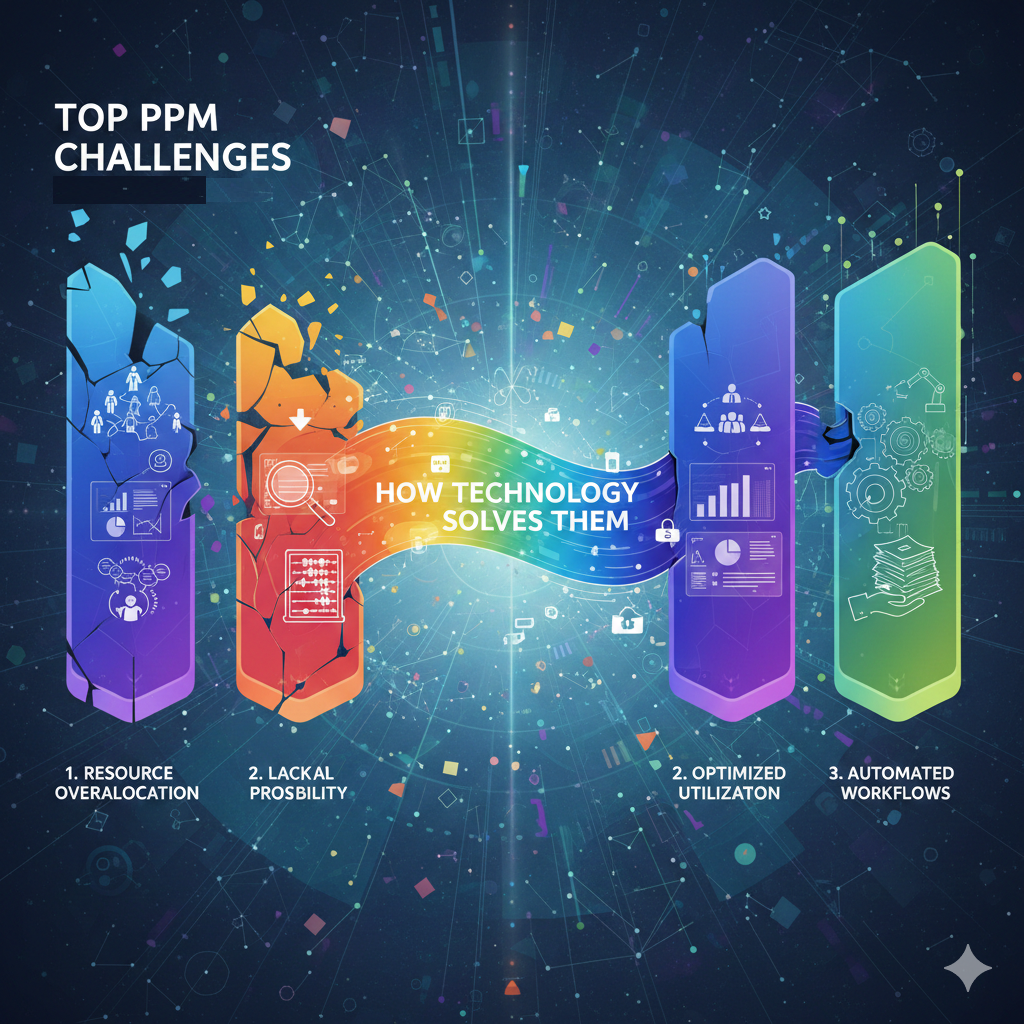
Project & Portfolio Management (PPM) is no longer just about managing tasks and budgets but also about enabling organizations to move faster, make smarter decisions and deliver value with confidence. Yet, even the most mature PMOs face persistent challenges: disconnected data, scattered tools, inconsistent processes and a constant struggle to prioritize the right work.
The good news? Today’s technology-especially platforms like Microsoft Power Platform, Dynamics 365 Project Operations and AI-driven insights can eliminate many of these barriers. Here are the top PPM challenges organizations face and how technology helps solve them.
1. Lack of Real-Time Visibility Across Projects
The challenge:
Most organizations still rely on spreadsheets, emails or outdated systems to track project progress. This results in blind spots, delayed reporting and decisions being made too late.
How technology solves it:
- Live dashboards that consolidate project health, risks, issues and milestones.
- Automated data refresh removes manual reporting.
- AI-driven insights highlight delays before they become critical.
- Platforms like Power BI and Project Operations deliver 360° visibility instantly.
Impact:
Leaders can make quick decisions using correct data and PMOs feel confident in what they report.
2. Ineffective Resource Management
The challenge:
Balancing workloads, identifying skill gaps and allocating the right resources becomes increasingly complex as organizations grow.
How technology solves it:
- Capacity planning tools that visualize workload distribution.
- Skill-based resource matching to allocate the right talent.
- Forecasting models that predict future resource needs.
- Centralized calendars & bookings prevent double allocations.
Impact:
Fewer resource conflicts, better use of people’s time and teams can work well without being overloaded.
3. Poor Project Prioritization and Portfolio Alignment
The challenge:
Many organizations start projects without understanding business impact or strategic alignment. This leads to wasted effort, budget overruns and confusion.
How technology solves it:
- Portfolio scoring models rank projects by ROI, risk and strategic value.
- Scenario planning tools help leaders choose the best combination of projects.
- Centralized portfolio views ensure teams focus on what matters most.
Impact:
Projects match the company’s goals, so money isn’t wasted and results improve.
4. Fragmented Tools and Disconnected Systems
The challenge:
Teams often use different apps for planning, budgeting, collaboration and reporting. As a result, data becomes inconsistent and workflows break.
How technology solves it:
- Integrated ecosystems like Power Platform unify data and workflows.
- Dataverse acts as a single source of truth across applications.
- Automation flows eliminate manual handoffs and repetitive tasks.
- Single-sign-on and unified dashboards provide a seamless user experience.
Impact:
Workflows become smoother, data is more trustworthy and teams use the systems more easily.
5. Manual Processes That Slow Teams Down
The challenge:
Project managers spend too much time chasing updates, creating reports or handling approvals. This reduces their ability to focus on strategic work.
How technology solves it:
- Automated workflows for approvals, status updates and reminders.
- AI Copilots assist with generating reports, drafting communications and summarizing risks.
- Smart forms & digital checklists reduce admin overhead.
Impact:
Teams work more efficiently and project managers get more time to lead instead of just managing tasks.
6. Inconsistent Methodologies and Governance
The challenge:
Different teams use different templates and processes. This results in inconsistent data, unclear accountability and governance gaps.
How technology solves it:- Standardized project templates for planning, risk logs, financials and reporting.
- Automated governance checkpoints ensure quality and compliance.
- Role-based access and workflows ensure the right people approve the right actions.
Impact:
Projects follow the same process, rules are stronger and quality gets better.
7. Difficulty Forecasting Costs and Benefits
The challenge:
Financial forecasting is often manual, error-prone and disconnected from real-time project data.
How technology solves it:- Integrated financial tracking aligns actuals with estimates.
- Predictive analytics highlight variances early.
- Portfolio simulations help plan budgets for future fiscal periods.
Impact:
Costs stay closer to the plan and the financial numbers become more accurate.
Why Technology + Strategy = A High-Performing PMO
Digital transformation is reshaping how organizations manage projects. By moving away from manual, disconnected systems and embracing intelligent digital tools, PMOs can:
⭐ Make informed decisions quickly
⭐ Improve delivery timelines
⭐ Use resources effectively
⭐ Strengthen governance
⭐ Achieve higher ROI on projects
Platforms like Microsoft Power Platform, Dynamics 365 Project Operations, Power BI and AI Copilots are helping modern organizations transform PPM from a reporting function into a strategic powerhouse.
Conclusion
PPM challenges are not new-but the tools to solve them have evolved dramatically. Organizations that embrace integrated, automated and AI-driven PPM solutions gain a competitive advantage through speed, accuracy and alignment.
“At UPLYNK, we’re committed to empowering the Microsoft Dynamics 365 community through insightful blogs, practical tutorials and real-world implementation guidance — helping professionals learn, grow and stay ahead in the ever-evolving D365 ecosystem.”